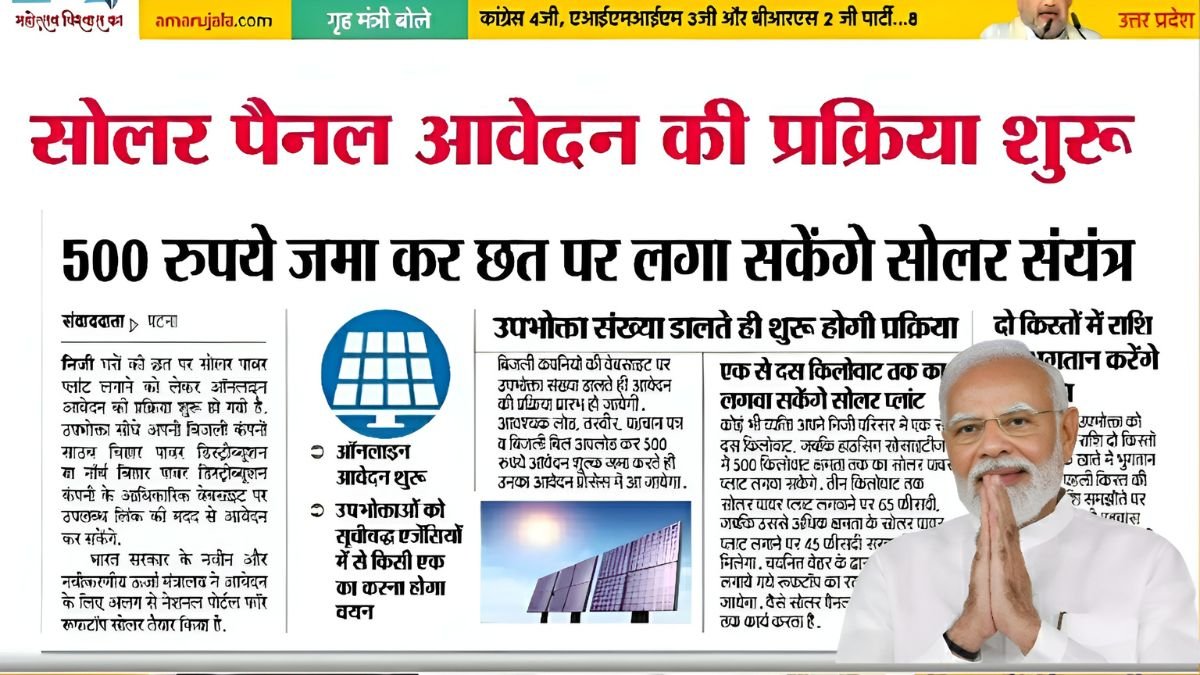
The scheme for solar panels
In modern times, electricity is the most important thing. Sometimes an actual power supply is a problem, whether in urban or rural areas. Farmers, in particular, need power for irrigation and agricultural works almost all the time. The government has initiated these schemes for solving the above-mentioned issues and promotion of growth in solar energy.
A Brief Introduction
The Solar Rooftop Scheme provides financial assistance and subsidies for the installation of solar panels on rooftops in residential and commercial buildings. The aim of the scheme is to make solar energy popular with the masses so that they can switch over to clean and renewable energy. The installation of solar energy brings down electricity bills and lessens some of the load for coal-based power generation.
Key Benefits
- Subsidy available for an individual system: up to 40% subsidy for the systems of up to 3 KW, up to 20% subsidy for the systems between 3 to 10 KW.
- A properly installed set of solar panels will work for 25–30 years, resulting in huge savings in the long run on electricity bills.
- Farmers can irrigate their lands using solar pumps and save the cost of diesel.
- Selling excess power generated back to the grid gives additional income.
Watch Out for False Claims
At times, social media markets claim that an entire solar system can be purchased for just a few hundred rupees; such claims are false. The price varies according to capacity and quality. An actual cost of a one-kilowatt system is approximately ₹60,000–₹70,000. After some subsidies, the cost may go down, but it cannot be low. Hence contact only government-approved sellers and get it thoroughly clear with the terms and conditions of the offer.
Special Benefits for Rural Areas
In villages, power cuts and erratic supply are common. Looking in such a scenario, solar panels are a reliable option. Solar pump installation would assist in timely water supply to the fields, enhancing crop productivity while reducing the costs of farmers. This will boost the rural economy.
Eligibility and Requirements
- Applicant should have a personal rooftop or building for solar panel installation.
- Rooftop should have sufficient space and sunlight.
- The applicant should connect to electricity with the requirement of documents (identity, address, electricity bill, proof of roof ownership).
Application Method
Variation exists in the process according to the states. Most states have the application for this scheme online on their power distribution company’s website. The application asks for details regarding the roof and the required capacity. After due approval, a list of government-approved vendors is provided, and there would be an inspection conducted after installation, at which point the subsidy will be credited to the beneficiary’s bank account. The whole exercise might take a good number of days.
Suggestions and Precautions
- Panels should be installed only through certified and government-approved contractors.
- Terms regarding warranty, maintenance, and service for the panel must be read very carefully.
- Regular cleaning and maintenance increases the efficiency of the panels.
- Don’t trust the abnormally cheap claims; refer to the official website or authorized agency.
Conclusion
Solar panels are a clever long-term kind of investment; they reduce electricity bills, repair the environment, and enhance livelihood conditions for rural people. This scheme was quite useful for one who gathers the right information, follows the procedures properly, and involved an honest vendor.
